


10 Feb A Surprising Catch from Utah Lake – Ancient Bonneville Returns
By Hayden Cook – Utah Cutthroat Slam Assistant Program Manager, Utah Trout Unlimited
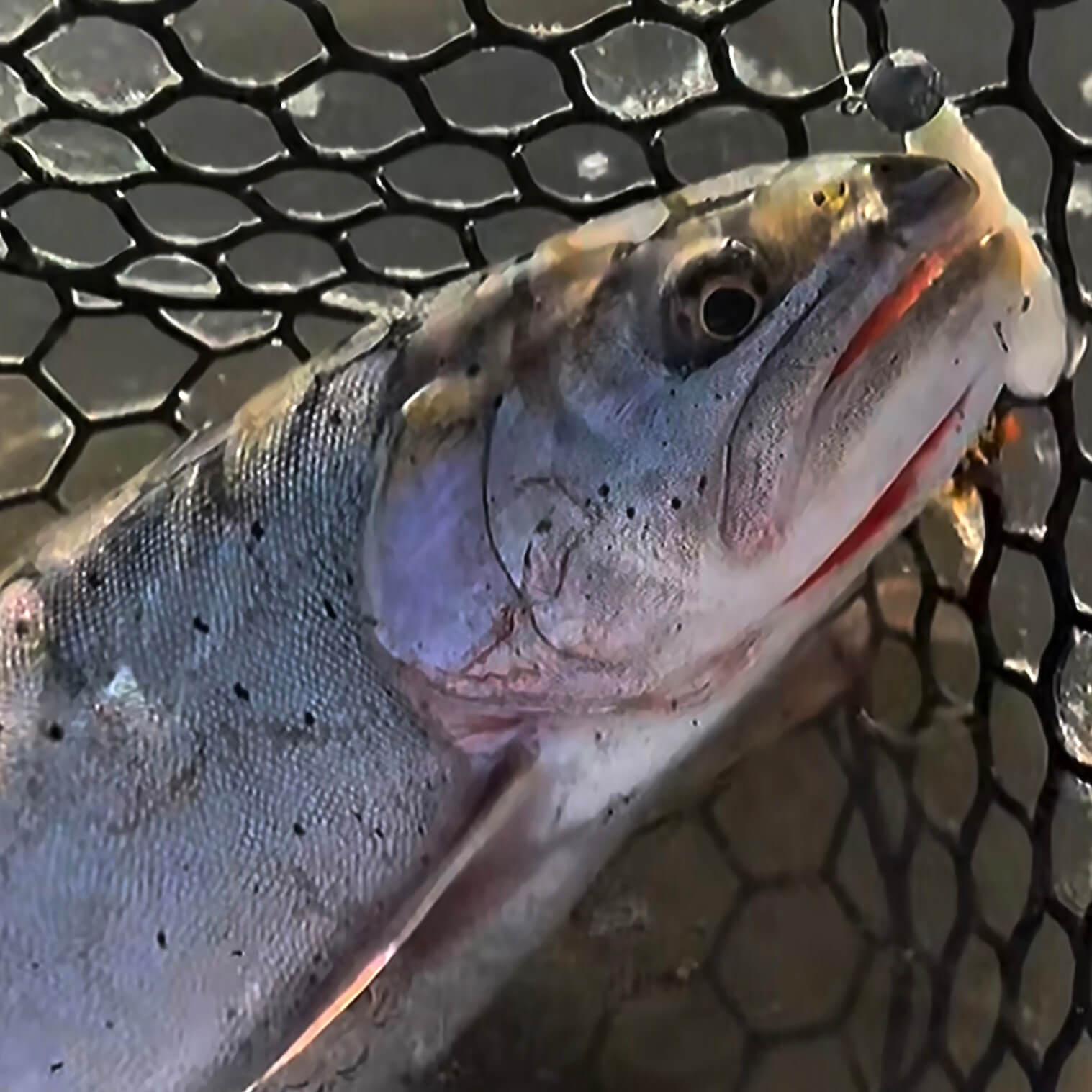
Michaell Rueckert knows Utah Lake well, and, like most anglers, he enjoys wondering what species of fish might show up on his line. On a recent outing, Rueckert – aka StreetRipped Outdoors on YouTube, Instagram, and TikTok – was hoping to hook into some pre-spawn walleye. Much to even his surprise, a species with an ancient history with Utah Lake, but a rarity these days, ended up in his net.
“At first glance, I thought I hooked into a small northern pike,” Rueckert explained. “It wasn’t until I netted it that I realized it was a trout.”
The fight only reinforced that initial assumption. “It fought really good,” he said. “It actually reminded me of a pike—once I hooked him, he took off like a rocket.”
When Rueckert finally realized what he had caught – a Bonneville cutthroat trout – the moment was surreal. “Absolute shock,” he recalled. “I had to call my dad almost immediately to tell him what had happened.”
Rueckert, who has fished Utah Lake for nearly two decades, was well aware of the lake’s history and the significance of the catch. “I love the history of Utah Lake,” he said, noting that understanding the past made the experience even more meaningful. For many anglers familiar with Utah Lake, this news may come as a surprise. However, to fisheries biologists with the Utah Division of Wildlife Resources (DWR), it represents an encouraging sign that decades of conservation work may be paying off.
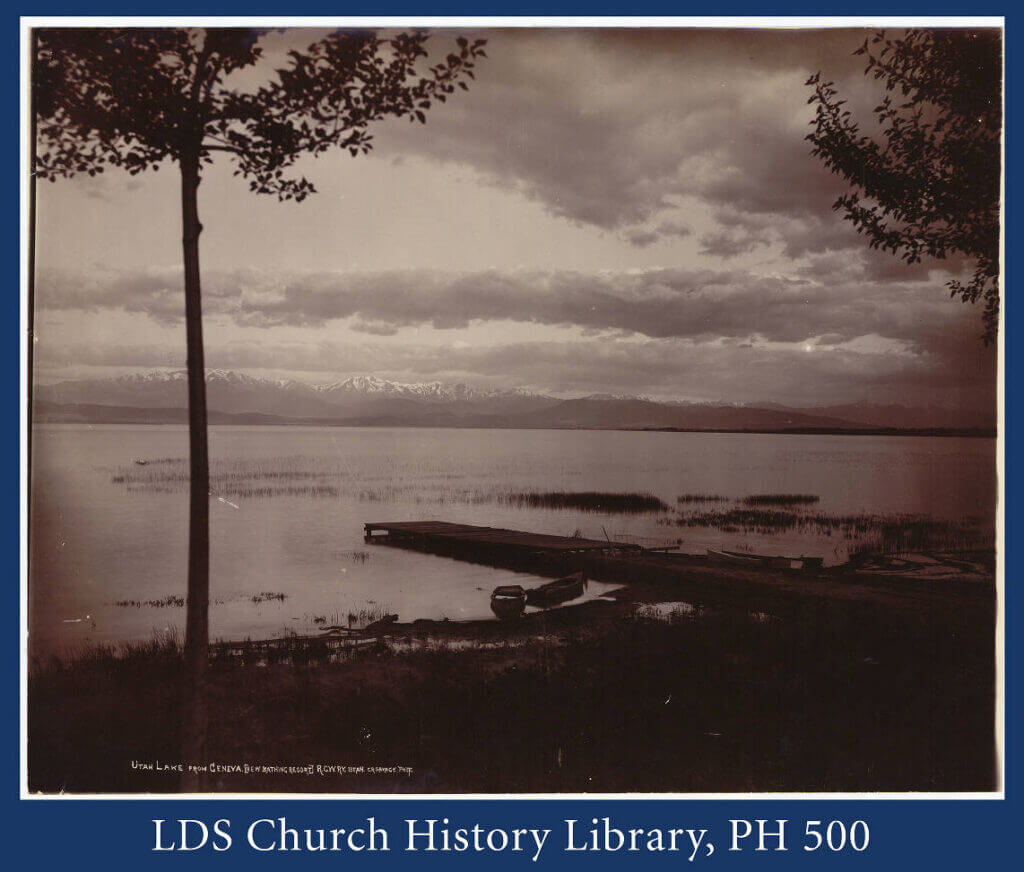
Utah Lake is the state’s largest natural freshwater body, but today it is best known as a warmwater fishery that supports a wide variety of aquatic species. From carp and catfish to walleye and bass, the lake hosts many sport and non-sport fish that appeal to local anglers. Historically, however, this was not always the case.
When early pioneers from The Church of Jesus Christ of Latter-day Saints first settled northern Utah, they found Utah Lake to be one of the most productive cutthroat trout fisheries in the western United States. The fishing was so abundant that the lake developed into a commercial fishery, supplying fresh trout to the growing Salt Lake City area as well as nearby communities and mining camps. Records indicate that by 1864, single net hauls of Bonneville cutthroat trout measured between 3,500 and 3,700 pounds—an astonishing amount of fish. To learn more about the Bonneville cutthroat of Utah Lake and the legend of the “40-pound trout” that supposedly used to reside there, click here.
Unfortunately, a combination of poorly regulated harvest, habitat and spawning ground degradation, and competition from introduced non-native species led to the collapse of the Bonneville cutthroat population in Utah Lake. Declines were noticeable as early as the 1870s, and by the 1930s the species was effectively gone from the lake. By the 1940s, Bonneville cutthroat trout were even believed to be extinct altogether.
Fortunately, that was not the end of the story. In the 1970s, remnant populations of Bonneville cutthroat trout were rediscovered. Through careful conservation and management, the species has rebounded significantly.
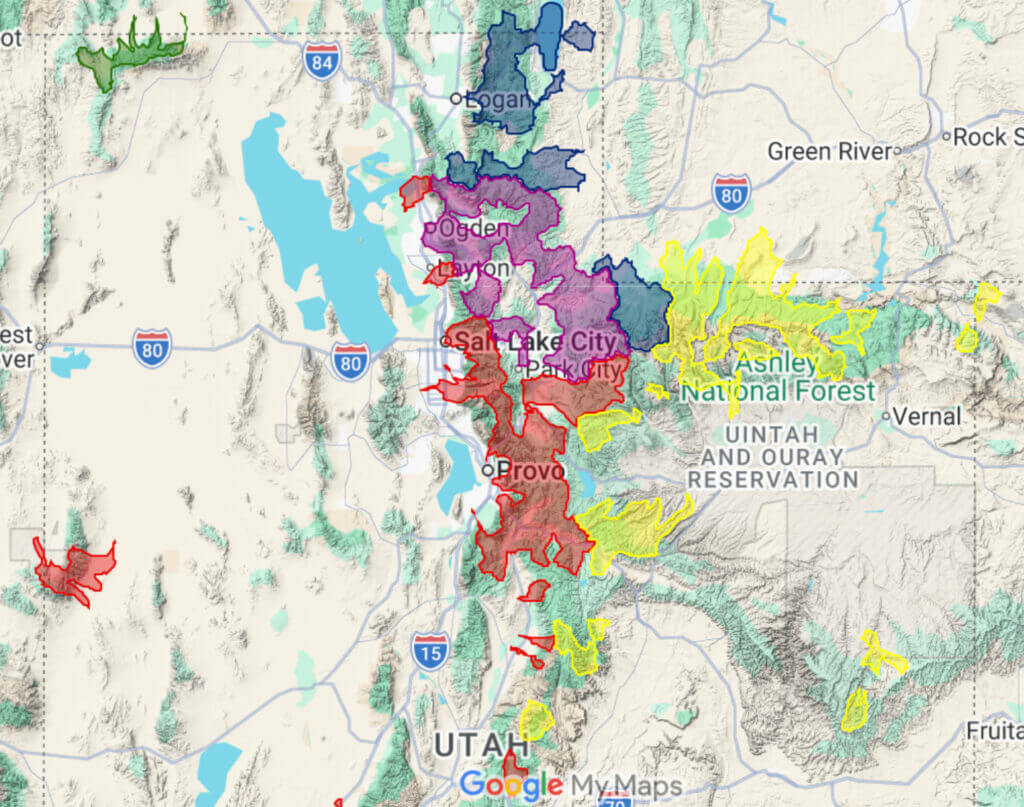
Today, Bonneville cutthroat trout have been reintroduced throughout much of their native range, including small tributary streams, major river systems, and select lakes. Anglers can now find these native trout across the Wasatch Front, sometimes even within urban areas of Salt Lake City. For more information on where to fish for them, anglers are encouraged to visit the Bonneville cutthroat trout page and Slam Map on this website.
One body of water that rarely supports trout, however, is Utah Lake. Due to a variety of factors over the past century, the lake no longer provides ideal habitat for coldwater species—especially sensitive fish like cutthroat trout. While brown trout and rainbow trout occasionally make their way downstream from the Provo River into the lake, warm summer water temperatures prevent them from surviving there year-round.
That’s what makes Rueckert’s catch so remarkable. Rueckert was not targeting trout at all. He was fishing the main lake for pre-spawn walleye—one of his favorite species to pursue—under crystal-clear blue skies during what he described as an abnormally warm winter day. When the fish first hit, he assumed he had hooked something far more typical for Utah Lake.
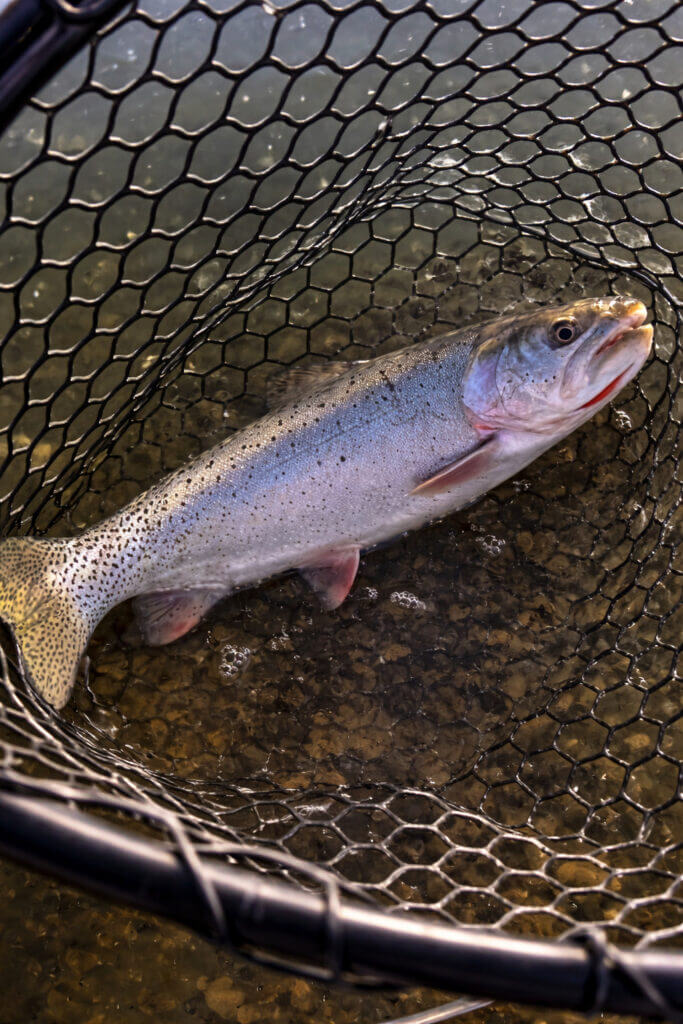
To better understand the biological context of this rare event, we spoke with Mike Slater, DWR Central Region Sportfish Project Leader. Slater explained, “The browns and the rainbows that we find in Utah Lake live in the tributaries and make their way down to the lake on occasion. But cutthroat aren’t nearly as likely to be caught or seen in Utah Lake as the other species that live upstream.”
Slater went on to add, “I’m just assuming that with all the cutthroat I’ve been stocking the last several years up in the streams and tributaries in Provo Canyon, Hobble Creek Canyon, Spanish Fork Canyon, and other areas, that some are bound to make their way down the system. I think that’s what’s happened here.”
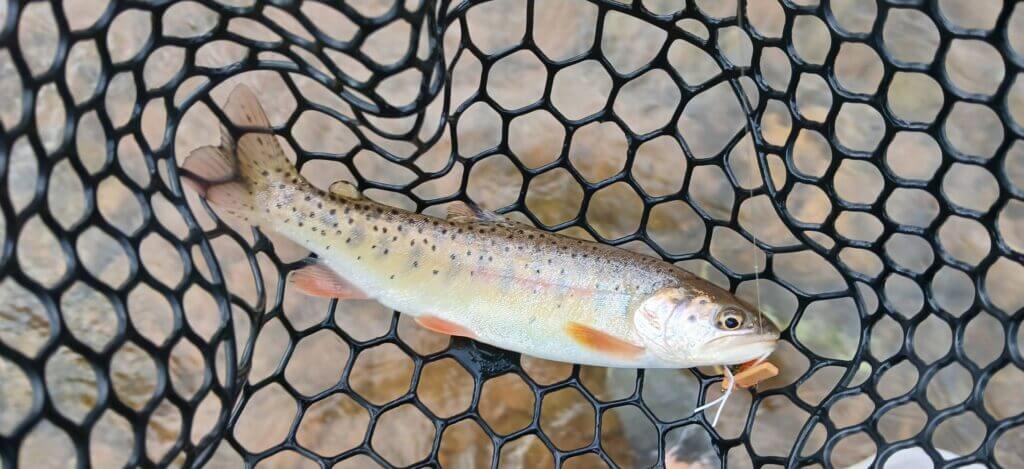
The Utah DWR continues to provide unique sportfishing opportunities while working to sustain native cutthroat trout populations through ongoing stocking efforts. Many tributaries to Utah Lake receive hundreds or even thousands of Bonneville cutthroat trout each year, a practice that has been in place for quite some time. Seeing a healthy cutthroat make its way back into this portion of the watershed—even briefly—is a major conservation success.
So, does this mean Bonneville cutthroat trout are back in Utah Lake for good? Will Utah Lake once again become a thriving cutthroat fishery? And should anglers head there hoping to complete their Utah Cutthroat Slam?
Realistically, probably not. Utah Lake has changed dramatically since the 1800s, and it is unlikely to ever support a stable, self-sustaining population of Bonneville cutthroat trout. However, it may not be out of the question to see these fish appear more frequently during colder months as they move through the system.
When asked whether this catch signals a long-term return of cutthroat trout to Utah Lake, Slater concluded, “I’d like to believe there’s more to it than that, but I don’t really have anything to go off of. It’s just nice to see a Bonneville in Utah Lake.”
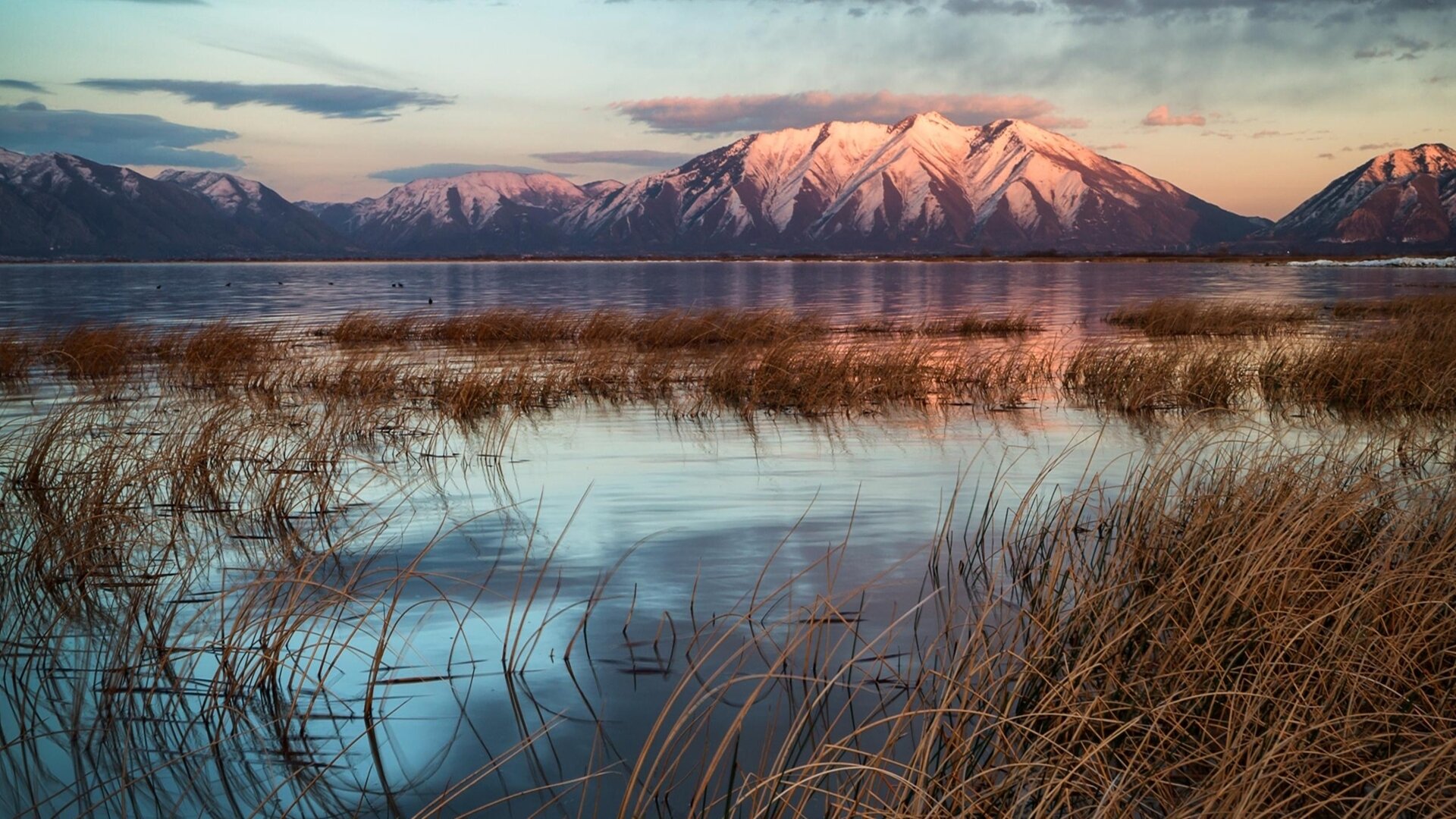
For Rueckert, the experience reinforced why he keeps coming back to Utah Lake after all these years. “To always keep fishing,” he said. “I’ve fished Utah Lake for about 18 years of my life, if not more, and every time I go out there it’s something new. It’s such an amazing fishery.”
When asked if Rueckert would be interested in pursuing his own Utah Cutthroat Slam and using this Bonneville cutthroat trout for one of the 4 subspecies required to complete it, he stated, “I have never done it personally, but I’ve been trying to teach myself how to fly fish, and I would love the take up the opportunity!”
Be sure to visit UtahCutthroatSlam.org for more information on how you can complete your own Slam, and good luck as you head out to make your own memories—perhaps even with a once-in-a-lifetime catch like this one.
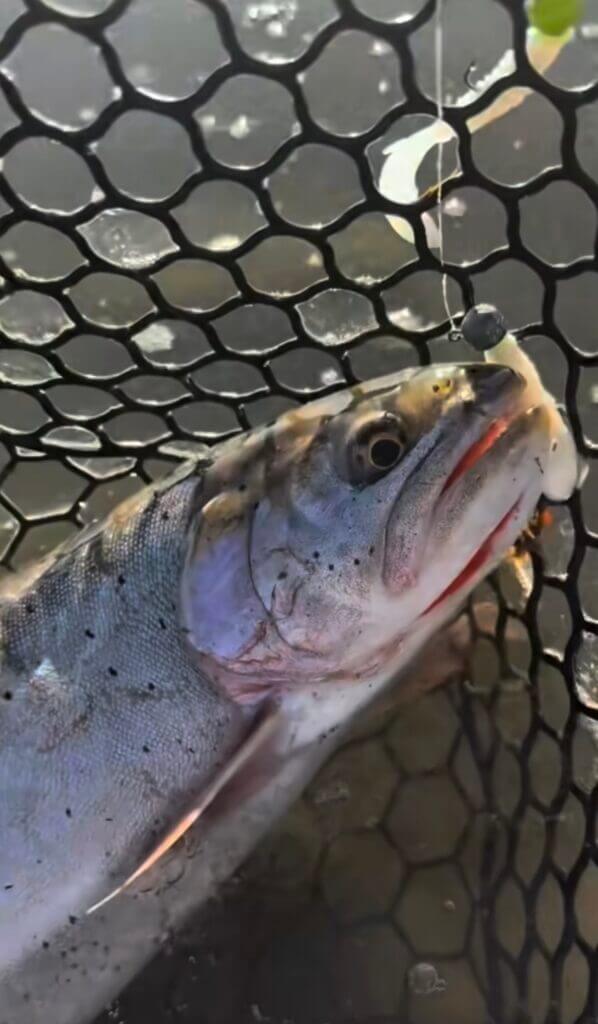
Michaell Adam Rueckert
Posted at 22:32h, 10 FebruaryThanks for the sweet read and amazing article! Hopefully others can experience catching a trout from Utah lake with conservation efforts to help remove carp!