


11 Mar Bonneville Cutthroat in Red Rock Country
By Hayden Cook – Utah Cutthroat Slam Assistant Program Manager, Utah Trout Unlimited
Native Trout in an Unexpected Oasis
As ridiculous as it felt stuffing my fly gear alongside dental loupes and scrubs for a trip to St. George, I brought it anyway. One February evening, after a full day of exams and fillings, I peeled off my clinic attire, pulled on a jacket, and headed for the creeks.
At the time, I was in my third year at the University of Utah School of Dentistry. Each semester we rotated to the school’s St. George clinic, spending our days sharpening hand skills, prepping crowns, and restoring teeth. But once clinic hours ended, southern Utah became our playground. Some classmates chased new restaurants, some played pickleball or golf, others hiked the red rock trails.
And then there was me, hauling fly rods and waders to the desert. Like many others, I was genuinely surprised to learn that you could catch Bonneville cutthroat trout near St. George.
Southern Utah in February is unpredictable. The sky hung gray and low, occasionally spitting rain mixed with snow. When I arrived, the weather seemed to be holding. So I pulled on my waders and carefully picked my way down a rocky hillside studded with cactus until I reached the narrow ribbon of water below.
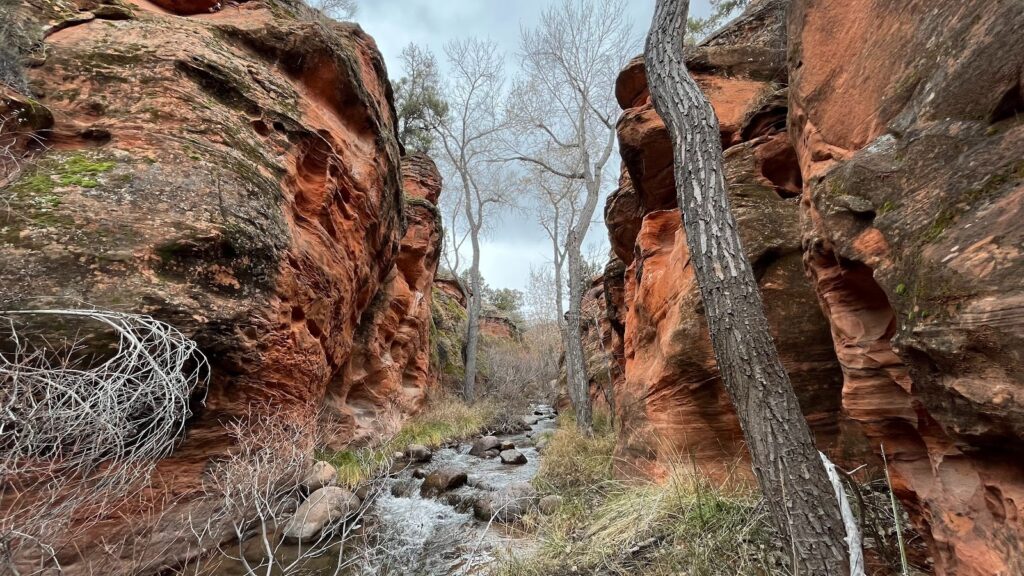
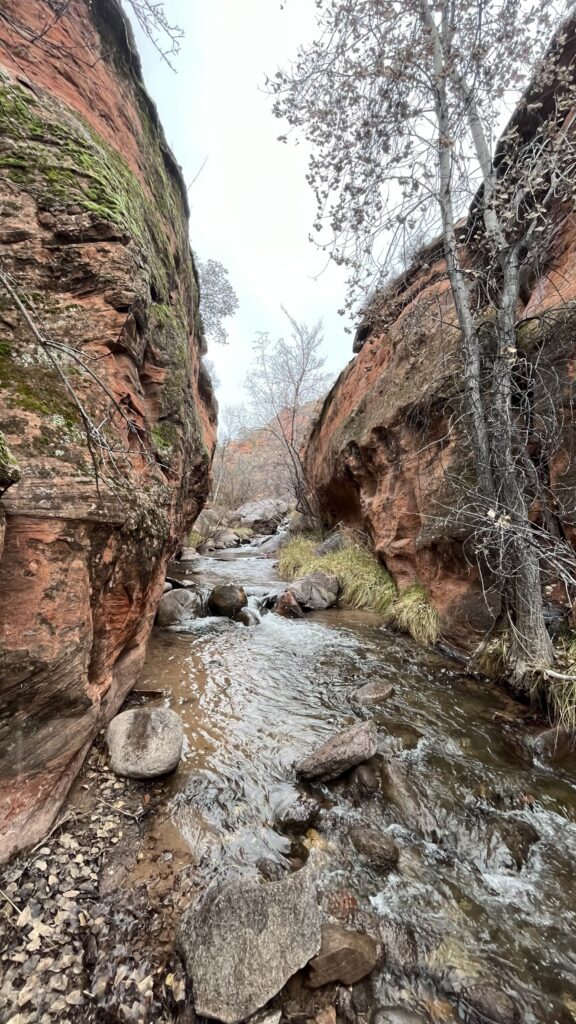
The creek was smaller than I expected. Intimate, overgrown with willows, more of a secret than a stream. I spotted a promising pool and tied on a classic dry-dropper rig. Odds were better that a trout would take the bead-head pheasant tail nymph, but if one rose to the dry fly, all the better.
“The creek was smaller than I expected. Intimate, overgrown with willows, more of a secret than a stream”.
It didn’t take long.
The willows crowded the banks, eliminating any hope of a traditional backcast. I resorted to my go-to small-stream method: the bow-and-arrow cast. Pinch the fly, bend the rod, release. The flies slipped neatly into the creek’s tight seams and pockets.
A subtle pause. A lift of the line.
Fish on.
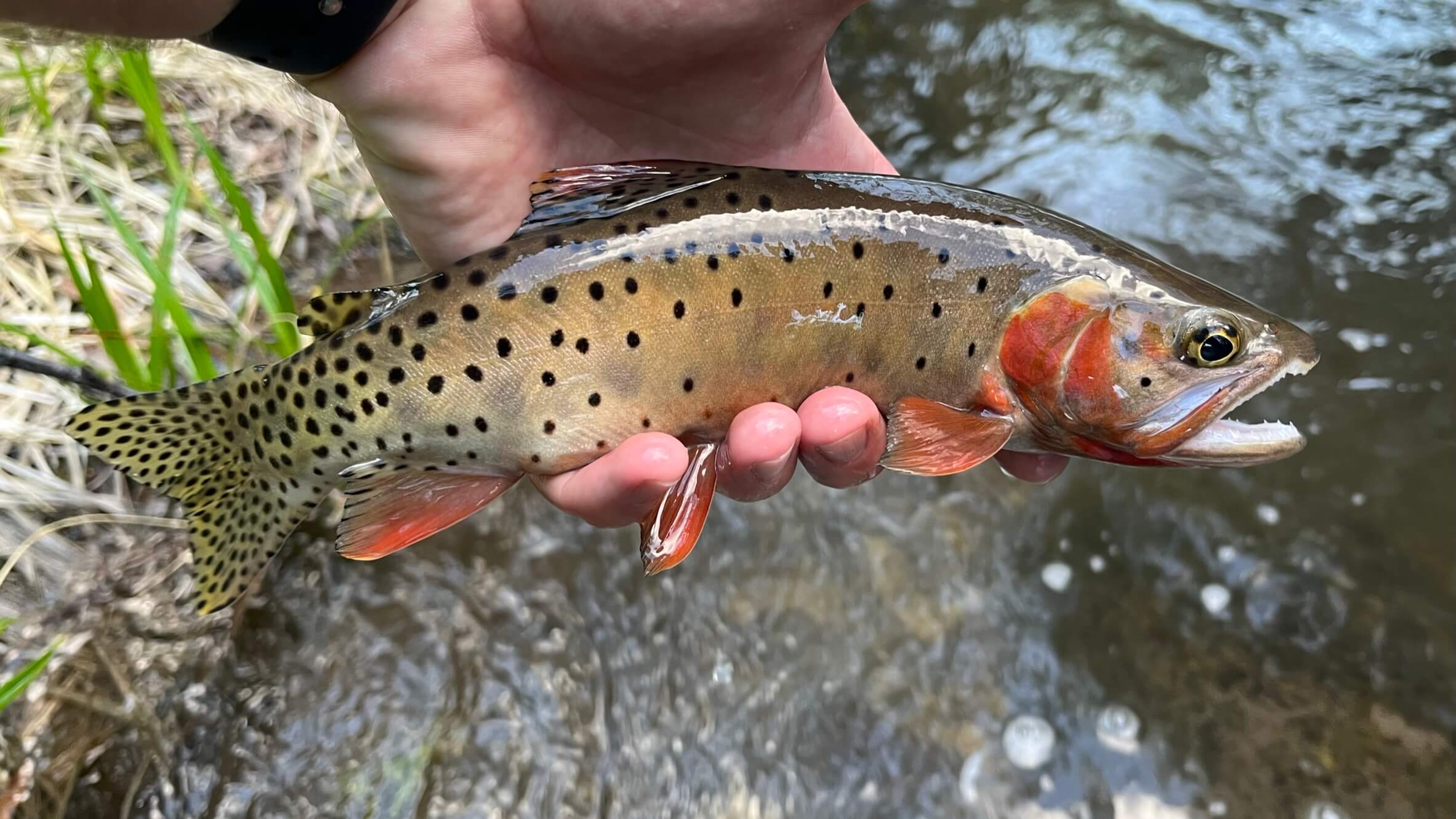
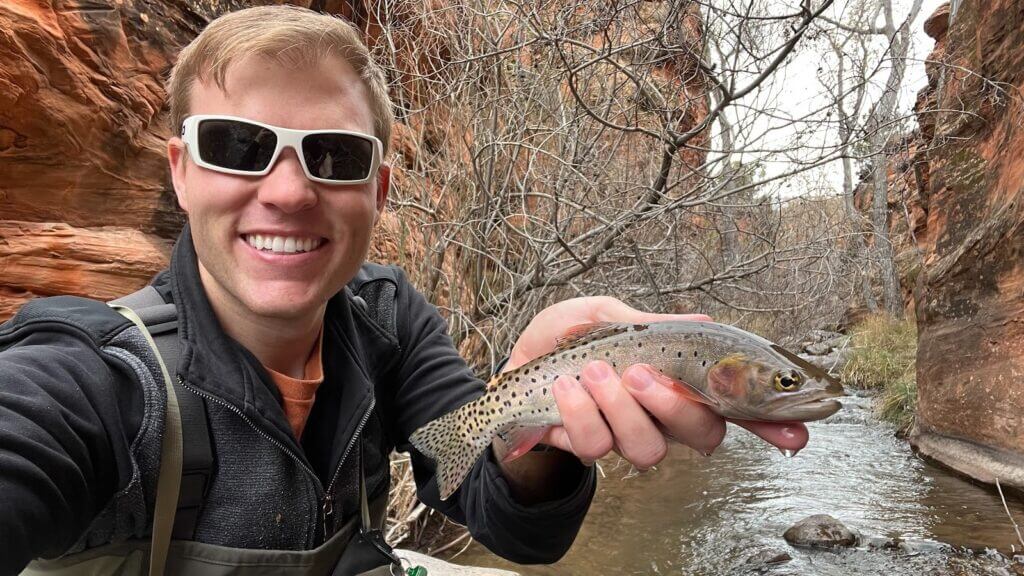
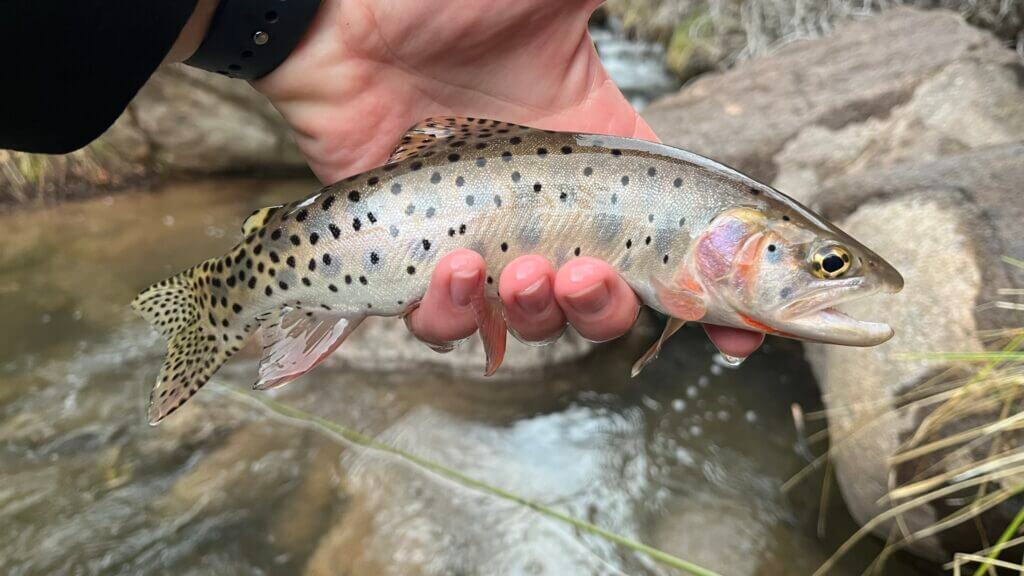
After a brief but spirited fight, I slid a beautiful Bonneville cutthroat into the net. I snapped a quick photo, admired the vivid red slashes beneath its jaw, and eased it back into the current. Just like that, I was one step closer to completing my Utah Cutthroat Slam.
I continued upstream, bushwhacking through brush and carefully avoiding cactus spines. Red rock walls rose around the narrow canyon, glowing even beneath the overcast sky. The setting felt improbable, trout water hidden in a landscape most people associate with desert heat and sandstone cliffs.
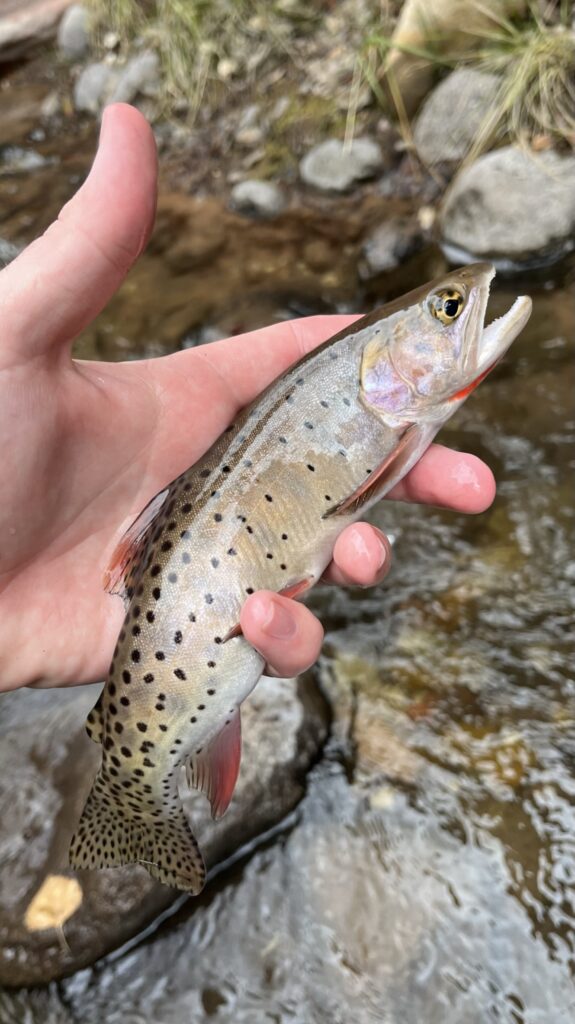
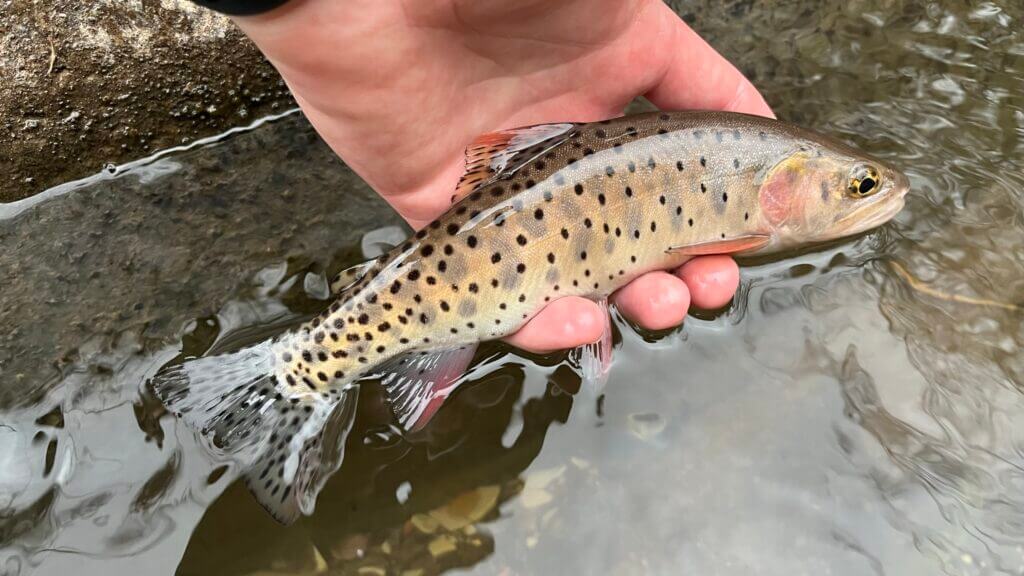
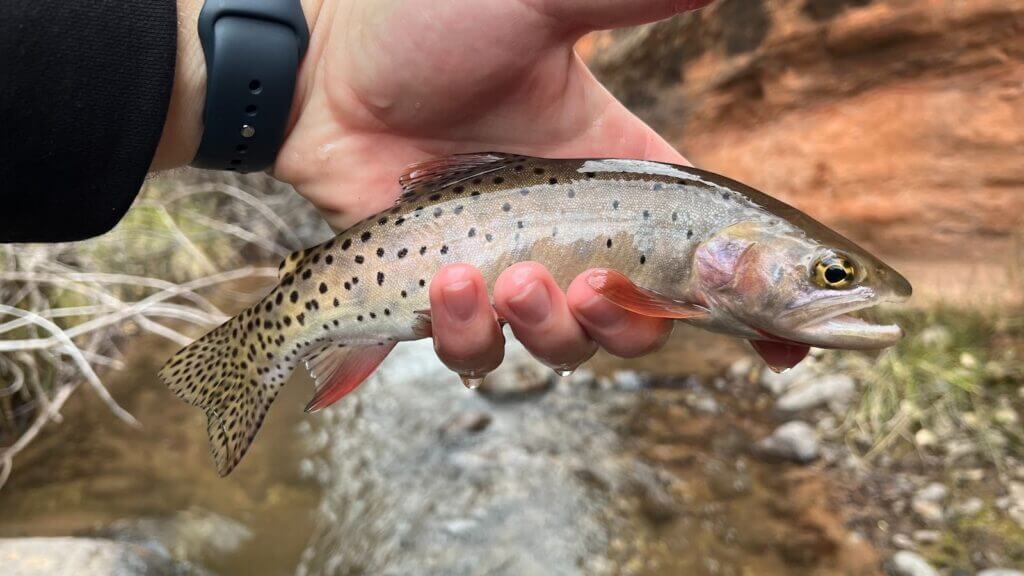
The cutthroat here were surprisingly light in color, their sides almost sandy, perfectly suited to blend with the creek’s pale bottom. Their spotting was bold and pronounced, growing denser toward the tail in that classic cutthroat pattern. And they all exhibited bright red cutthroat slashes, what a sight to behold. A few fish slashed at my dry fly, but most ate the nymph. Each one was brilliantly marked, and without question, some of the prettiest Bonnevilles I’ve ever caught.
Cold Water in the Desert
It surprises many people that trout survive this far south. St. George conjures images of blazing summer heat, red rock mesas, and manicured golf courses, not cold-water fisheries.
But these creeks flow year-round, fed by springs and higher-elevation sources. Trout, as a cold-water species, depend on lower temperatures to survive. While summer afternoons may push water temperatures beyond their comfort zone, nighttime cooling often drops temperatures enough to sustain them. It’s a delicate balance, one that makes careful handling and mindful fishing especially important.
The Mystery of Their Origin
There’s another layer to this story — one that makes these fish even more fascinating.
The creeks in this region historically connected to the Virgin River, a tributary of the Colorado River. Logically, one might expect Colorado River cutthroat trout in this drainage. So why are these fish Bonneville cutthroat?
Across Utah, the Cutthroat Slam rules require that each subspecies be caught within its native range. By drainage alone, this population raises questions.
The answer lies in the work of biologists.
In 1973, researchers discovered remnant populations of genetically pure Bonneville cutthroat trout in two small creeks within this Virgin River drainage. This finding is documented in the research article Distribution and Abundance of Native Bonneville Cutthroat Trout in Southwestern Utah.
Even the authors noted the peculiarity of the discovery. Genetically pure Bonneville cutthroat in this drainage didn’t neatly match the expected watershed boundaries. They wrote:
“It was uncertain whether these 2 populations were natural or introduced by early settlers.”
Early settlers were known to move fish to establish food sources. Yet these creeks are tiny, almost insignificant ribbons of water. They are not places one would logically choose to stock trout, which lends some credibility to the idea that these may have been natural, isolated remnants.
Geologically, the creeks sit just south of the Bonneville Basin. It’s possible that ancient drainage shifts or geological events once allowed Bonneville cutthroat access to these waters before the systems were redirected into the Virgin River drainage.
During the 1980s and 1990s, biologists transplanted trout from these two creeks into nearby waters that had been cleared of nonnative rainbow trout.
Because of this documented restoration work, Bonneville cutthroat caught in these waters qualify for the Utah Cutthroat Slam. So be sure to check out our Bonneville cutthroat page for maps highlighting the regions where these cutthroat may be found today.
A Unique Opportunity
The presence of Bonneville cutthroat in red rock country is unusual — a biological puzzle wrapped in a beautiful landscape. For Slam participants, it offers a rare chance to chase native trout in one of Utah’s most iconic settings.
If you make the trip, be mindful of the sensitive nature of these fish. Trout are less likely to survive when overstressed, especially when water temperatures are high. So it is best to fish in the morning before the heat of the day, and even to avoid fishing altogether in this desert climate during the hottest months of the year, July and August. Regardless of the time of year, be sure to always handle trout gently and release them quickly. Read our article here about proper trout handling techniques. And don’t forget, beware of rattlesnakes.
These fish persist in a fragile margin of habitat, a thin thread of cold water winding through the desert.
And there’s something unforgettable about watching a native cutthroat slip back into that current, red slashes flashing briefly beneath the sandstone walls, before disappearing into the shadows of southern Utah. So check out the Utah Cutthroat Slam website for guidance as you plan your next trip and possibly catch these special cutthroat.
Sorry, the comment form is closed at this time.